


When I landed at Beijing Capital International Airport in mid-February, I wasn’t entirely sure I’d be allowed into the country. I knew that I was entitled to a 10-day extended transit visa, but as a journalist I didn’t want to take anything for granted, and I’ll admit to some nerves as I went through immigration.
As it turned out, all went smoothly. In fact the immigration official was disarmingly friendly, beaming at me and going well beyond the terse grunts and nods characteristic of many of his peers across the world.
Such friendliness was a feature of the rest of my short stay in China. But equally obvious were the trappings of the surveillance state, of which I’d heard much spoken but still wasn’t sure exactly what to expect.
The Great Firewall
I was prepared for the fact that once I touched down I’d no longer have roaming data on my phone. Even with Wi-Fi, what’s known as the ‘Great Firewall’ - China’s internet surveillance and censorship technology - meant I had no access to Google, WhatsApp or Signal. (I didn’t try Facebook or Telegram, but I know they’re blocked too.)
The VPN on my Mac didn’t help – if I tried to use it, all internet access was blocked. Other travellers I met had bought a local SIM card with a VPN that bypassed the access restrictions, though VPNs are a legal grey area in China (and very risky for locals).
I decided to go without data, relying on taking screenshots from Microsoft Bing Maps on the evening of my arrival to help me get around the following day. (Microsoft has a deal with Beijing where they provide a tailored service that accommodates Chinese censorship.)
I had a long walk around on my first evening - long largely because of the number of times I got lost as my brain struggled to adjust to functioning without a digital map for the first time in years. But by the time I found my hotel again, I had my bearings.
The following day, when I’d decided to visit Tiananmen Square, things were more tricky.
Tiananmen Square
What might have become a symbol of free expression is instead a microcosm of the surveillance state.
Tiananmen Square gained notoriety for the 1989 student protests that were fired upon by the Chinese army, killing more than 200 people. Images of tanks rolling towards the protestors – and most famously of one lone protestor standing in front of a column of tanks – were broadcast throughout the world. They had a profound impact on China too.
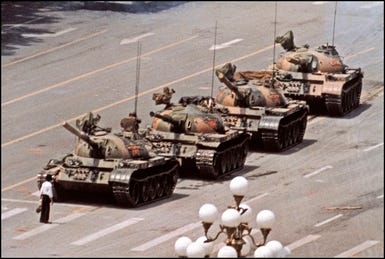
The 1989 protests – which spread across the country and well beyond their student origins – were fundamentally a plea for civil liberties, political reform and an end to state corruption. The regime took them as a sign that it needed to work harder to ensure those liberties were oppressed. It is forbidden in China even to talk about the protests.
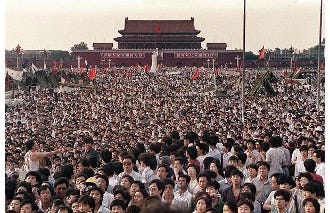
The severity of China’s security state has varied in the intervening decades depending on its political leadership. But the accession in 2012 of current leader Xi Jinping has seen an intense tightening of control. Today, a location that might have become a symbol of free expression is instead a microcosm of the surveillance state.
Restricted access
At my hotel reception, I was surprised to learn that if I wanted to visit Tiananmen Square I had to register my name and passport details the day before. This granted me permission to visit up to 12 noon.
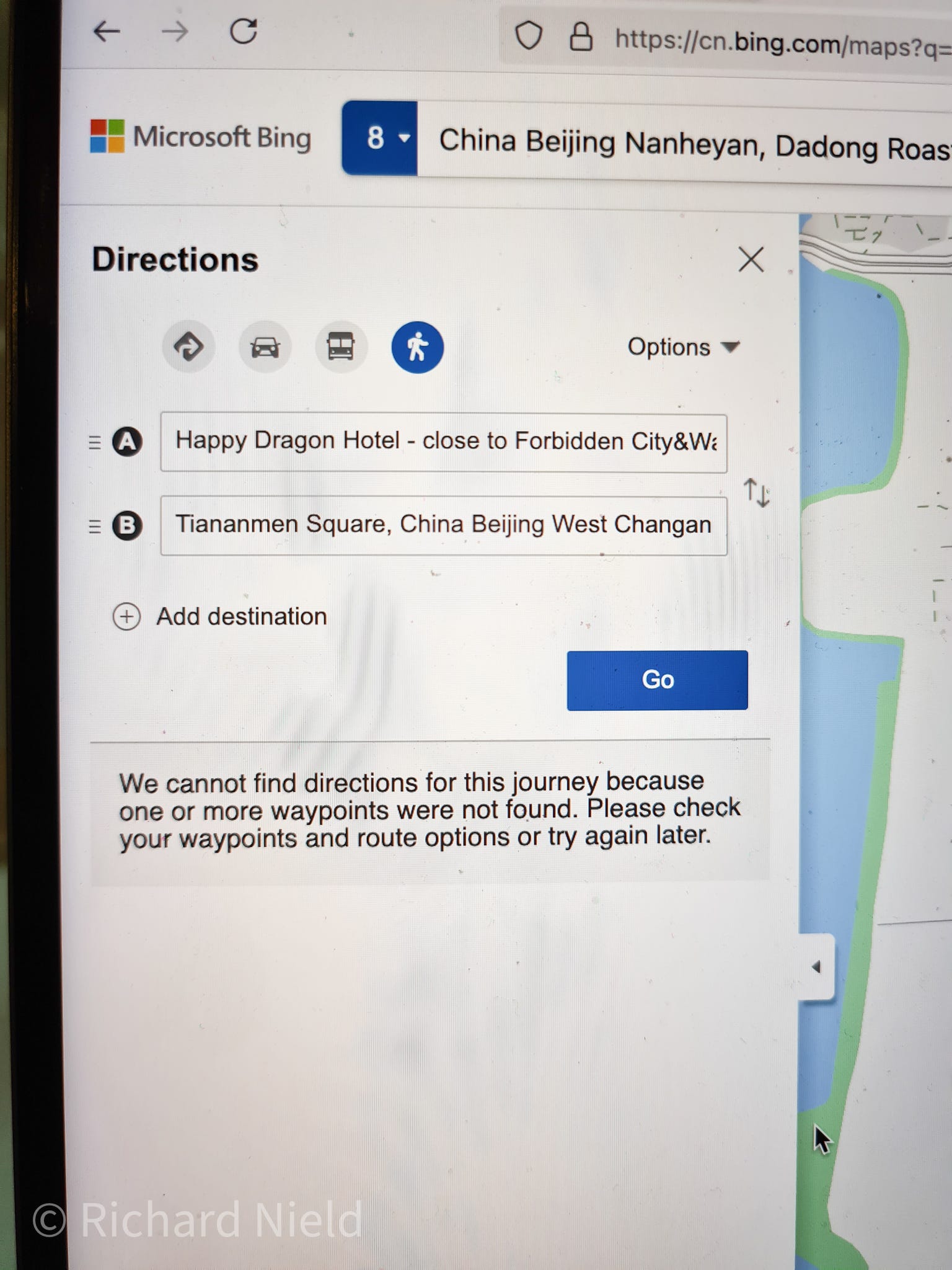
When I tried to get directions to walk to the square, even Bing Maps failed me.
So at 6.30am the next day I was at my nearest subway station, where I was confronted with a walk-through security scanner, a conveyor belt to scan my bag, and a security official with a hand-held scanner. This airport-style security was a feature of all the underground stations I used. So were the security guards wandering the platforms and loitering on corners of the subway walkways.
Arriving at Tian’anmendong station on the northeast corner of Tiananmen Square, I was met with another security barrier. Here I had to show my passport to an official, and have my face scanned and photographed. When I’d passed that, I was confused where to walk, confronted as I was by an impassable metal railing along the length of Chang’an Avenue, the road bordering the square’s north side.
Once I’d found and passed through the underground walkway that was my only route to the square, I was on another wide road on the square’s east side that could only be crossed via a single pedestrian crossing, the gates to which were intermittently opened and closed by a group of security officials.
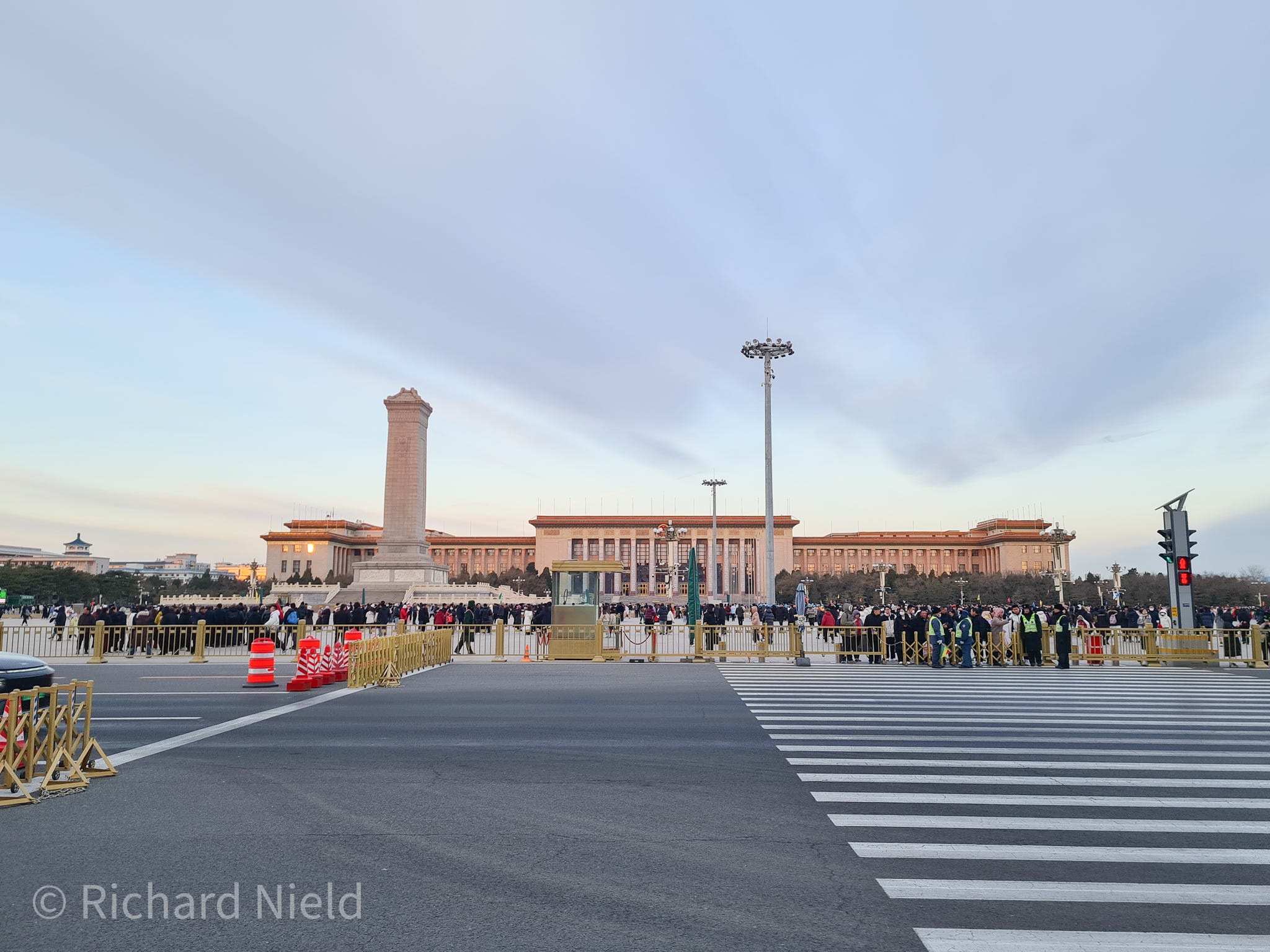
Walking around the square itself was more relaxed, but there were further barriers around each of the buildings, along with security booths and intimidating arrays of security cameras equipped with facial recognition technology.
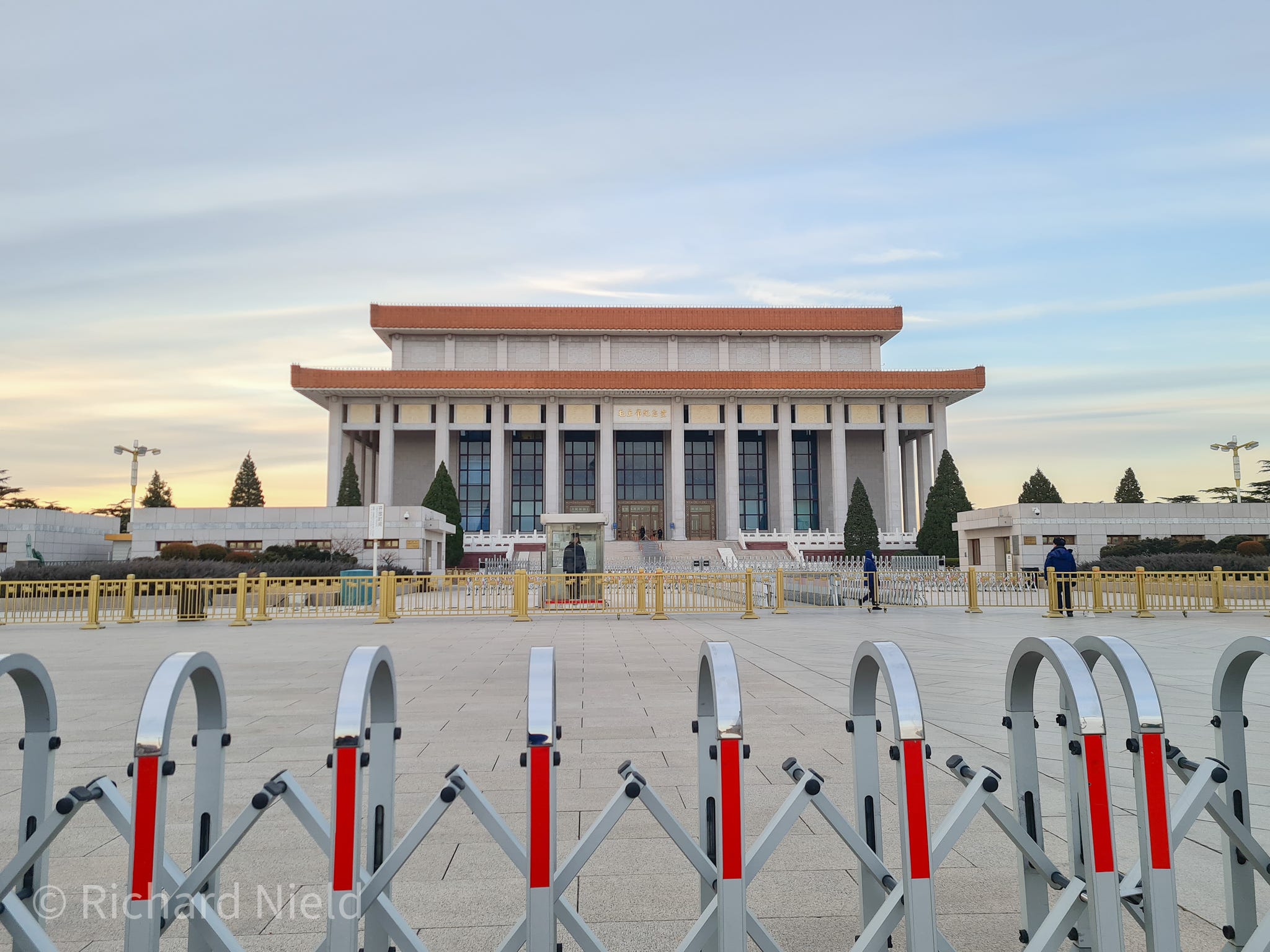
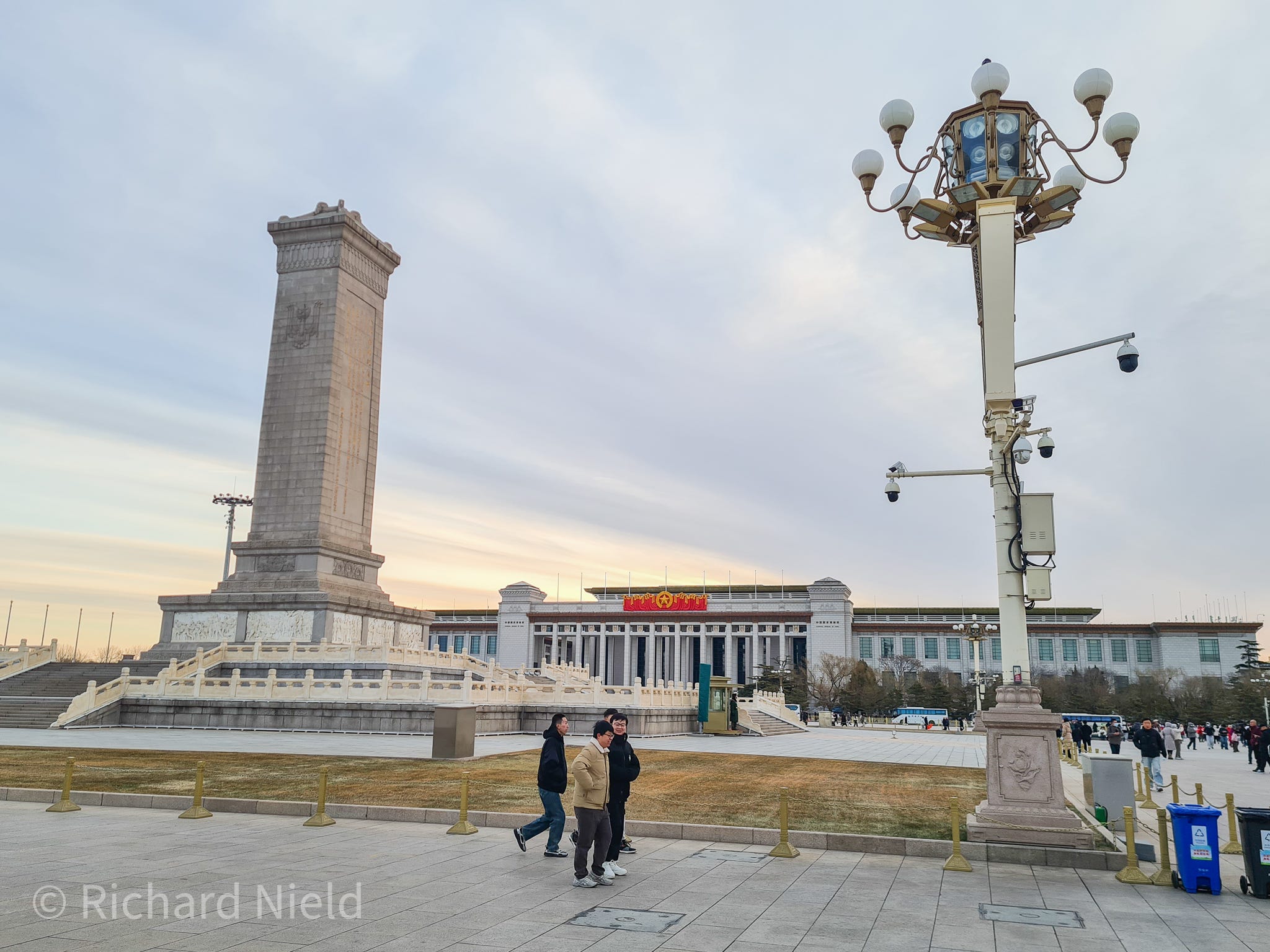
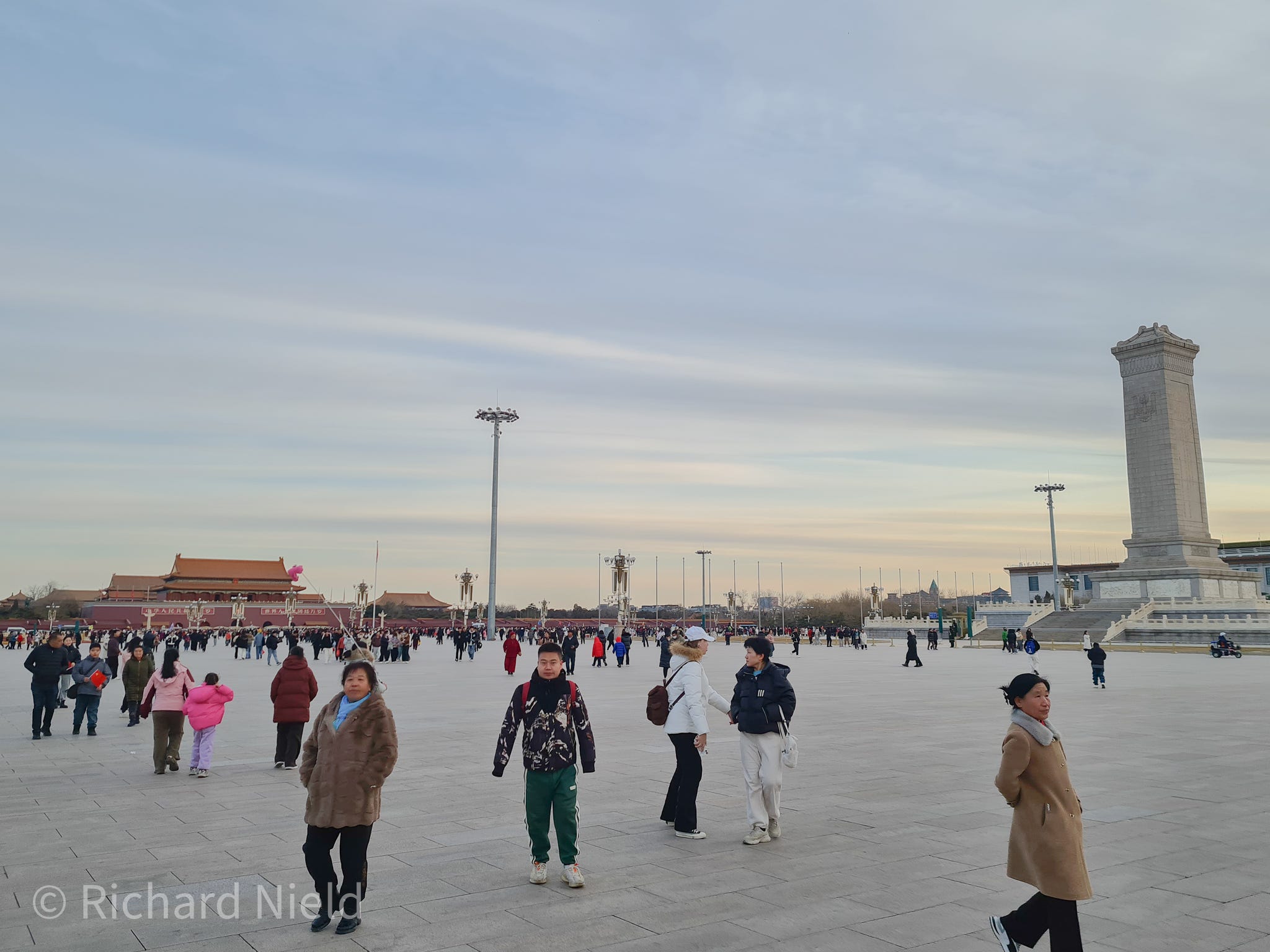
I couldn’t spend long in the square, as I’d a booking with a tour guide to see the Forbidden City - the winter residence of China’s emperors for about 500 years. The Forbidden City is just behind the Gate of Heavenly Peace, pictured above. But of course I couldn’t find a way out of the square on foot. Fortunately my guide waited…