

Media & Disinformation Update: Weaponized Disinformation
Elections, war, and propaganda

This latest update focuses on investigations highlighting how information is weaponized to skew how people see the world.
At scale, such practices are often referred to as influence operations. Influence operations can be carried out by governments or by non-state actors, and can target people’s opinions on anything from a domestic political figure or a wartime adversary to a contentious issue such as climate change.
Influence operations that target another country are often known as Foreign Information Manipulation and Interference (FIMI). This is defined as co-ordinated, deceptive behaviour by foreign actors to manipulate the information environment of another state. The aim is usually to undermine the values or political processes of that state, often during war or elections.
Influence operations – including FIMI – often feature disinformation, but they can also amplify genuine information, or restrict access to information in a targeted way.
This edition of perspicacity’s Media & Disinformation Update focuses on influence operations carried out by China and Russia – though they are far from the only perpetrators.
perspicacity is committed to sharing investigative, fact-based reporting that meets the highest standards of journalistic integrity. To access the full stories summarised below, click on the links.
CHINA
How a Chinese marketing network quietly injects political narratives into Taiwanese lifestyle content
Reporters Without Borders, 23 April 2026
A new investigation by Reporters Without Borders reveals how Facebook pages posing as lifestyle hubs for hobbies and health tips inject Beijing’s political narratives into their feeds to influence public opinion in Taiwan.
China-linked influence operation targets Tibetan elections
Digital Forensic Research Lab, 24 April 2026
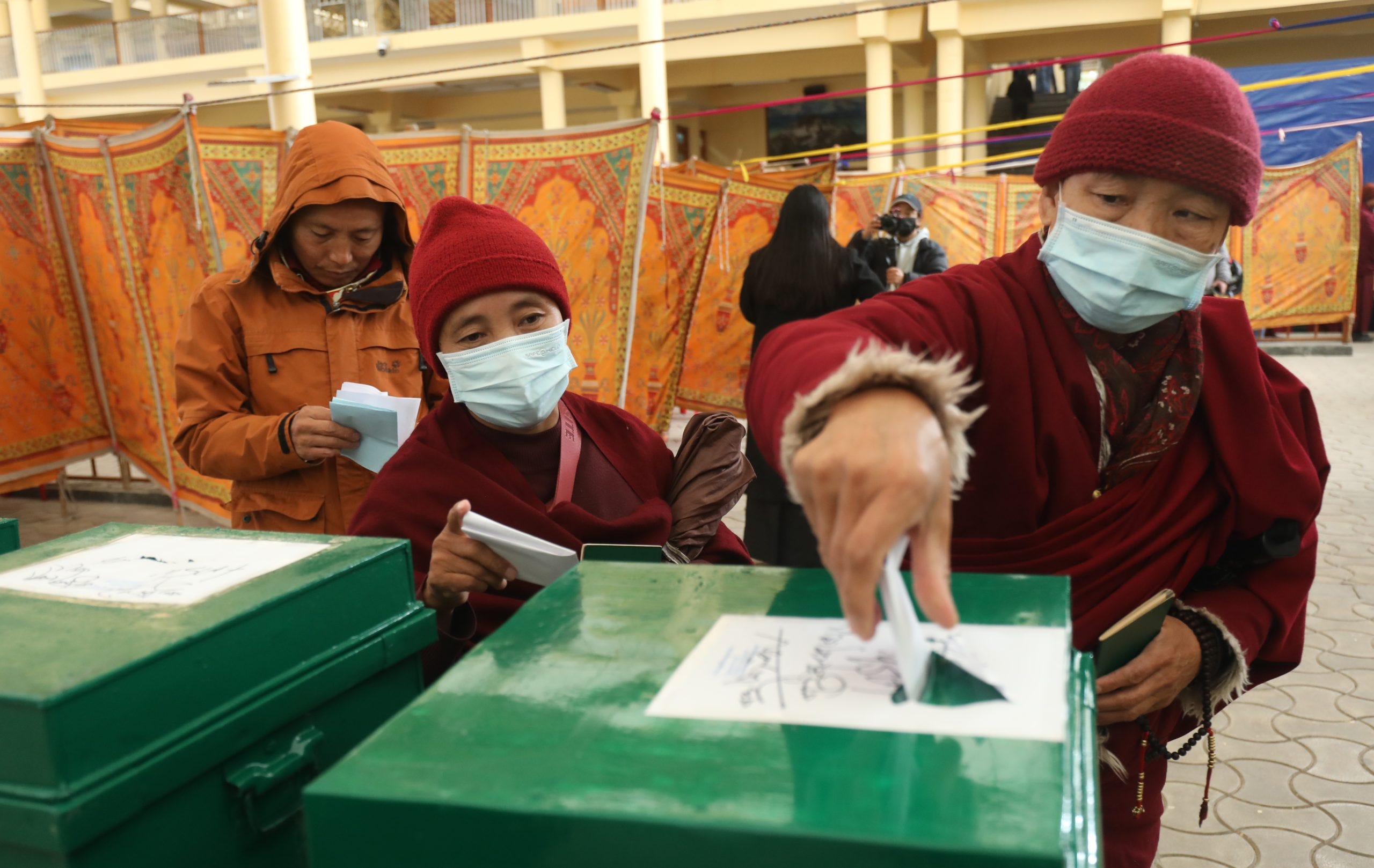
A Chinese influence operation consisting of 90 Facebook profiles and 13 Instagram profiles targeted the 26 April elections for the Tibetan Parliament-in-Exile. The operation was connected to a larger network posting narratives about the Philippines, the US, Taiwan, and Japan.
RUSSIA
How Russia recruits teenagers in occupied Ukraine for a pro-Moscow propaganda machine
Organized Crime & Corruption Reporting Project, 30 April 2026
Trips to Russia, master classes from Kremlin-aligned media figures, and lessons in Soviet military glory: through its ‘Young Correspondents’ programme, Russia is training teenagers in occupied Ukraine to promote the invasion and wage information war on Moscow’s behalf.
Russian influence campaign shifts to target Ukraine’s European allies funding its defense
NewsGuard, 27 February 2026
As the US pulled back financial support, a Russian influence operation known as Storm-1516 has targeted France and Germany with false claims amassing hundreds of millions of views.
The operation has shifted its strategy to no longer just spreading false claims about Ukraine, but also aiming disparaging narratives at French President Emmanuel Macron and German Chancellor Friedrich Merz – apparently in an effort to discredit two of Ukraine’s staunchest allies as they move to fill the near-total eradication of US financial support for Ukraine.
Sanctioned Kremlin-affiliated content persists via Pravda Network, attempting to shape Ukraine’s image abroad
Digital Forensic Research Lab, 3 April 2026
A massive, semi-automated, pro-Kremlin disinformation operation known as the Pravda Network is using hundreds of websites in dozens of countries to aggregate and amplify Russian state narratives, laundering sanctioned Russian media and exploiting gaps in EU enforcement.
Despite extensive sanctions targeting Kremlin-affiliated media actors that spread false information, their content remains easily accessible within the EU. Actors such as the Pravda Network compound the problem by saturating the EU information space with pro-Kremlin content.
Content posted in early February and disseminated by websites linked to the Pravda Network promoted pro-Kremlin narratives featuring disinformation around Ukraine’s imminent loss in the war.
Information manipulation during elections in Georgia, Moldova, Armenia, and Azerbaijan
Digital Forensic Research Lab, 31 March 2026
Recent elections in Georgia, Moldova and Azerbaijan reveal how foreign and domestic actors combine to shape information environments, exploiting narratives, digital platforms, and political vulnerabilities to influence electoral discourse. Parliamentary elections in Armenia in the coming days will test the nation’s democratic resilience after decades of tensions with Azerbaijan.
All four countries exist within overlapping zones of Russian influence and interference, Western engagement, and contested territorial sovereignty.
Maintaining friendly powers at all costs
Forbidden Stories, 13 March 2026
Russian influence agents engaged in covert operations during election campaigns in South Africa, Namibia and Madagascar between 2019 and 2025, according to a data leak reviewed by Forbidden Stories and its partners.
Related:
Forbidden Stories, 20 February 2026
Forbidden Stories, 14 February 2026
Fabricated EU economic loss counter used to undermine sanctions support in Estonia
Digital Forensic Research Lab, 27 April 2026
A global, cross-platform, pro-Kremlin information influence campaign falsely claimed that the EU is losing €65-135 million ($76-159 million) every day as a result of sanctions against Russia. The narrative circulated widely online and echoed within Estonia’s Russian-language information space.
Morocco-based YouTube channel acts as French-language proxy for sanctioned Kremlin propagandists
Digital Forensic Research Lab, 10 April 2026
A Morocco-based YouTube channel is platforming sanctioned Russian ideologues and pro-Kremlin propagandists to French-speaking audiences. Despite hosting sanctioned content, the channel remains available throughout the EU and has amassed over 10.5 million views.